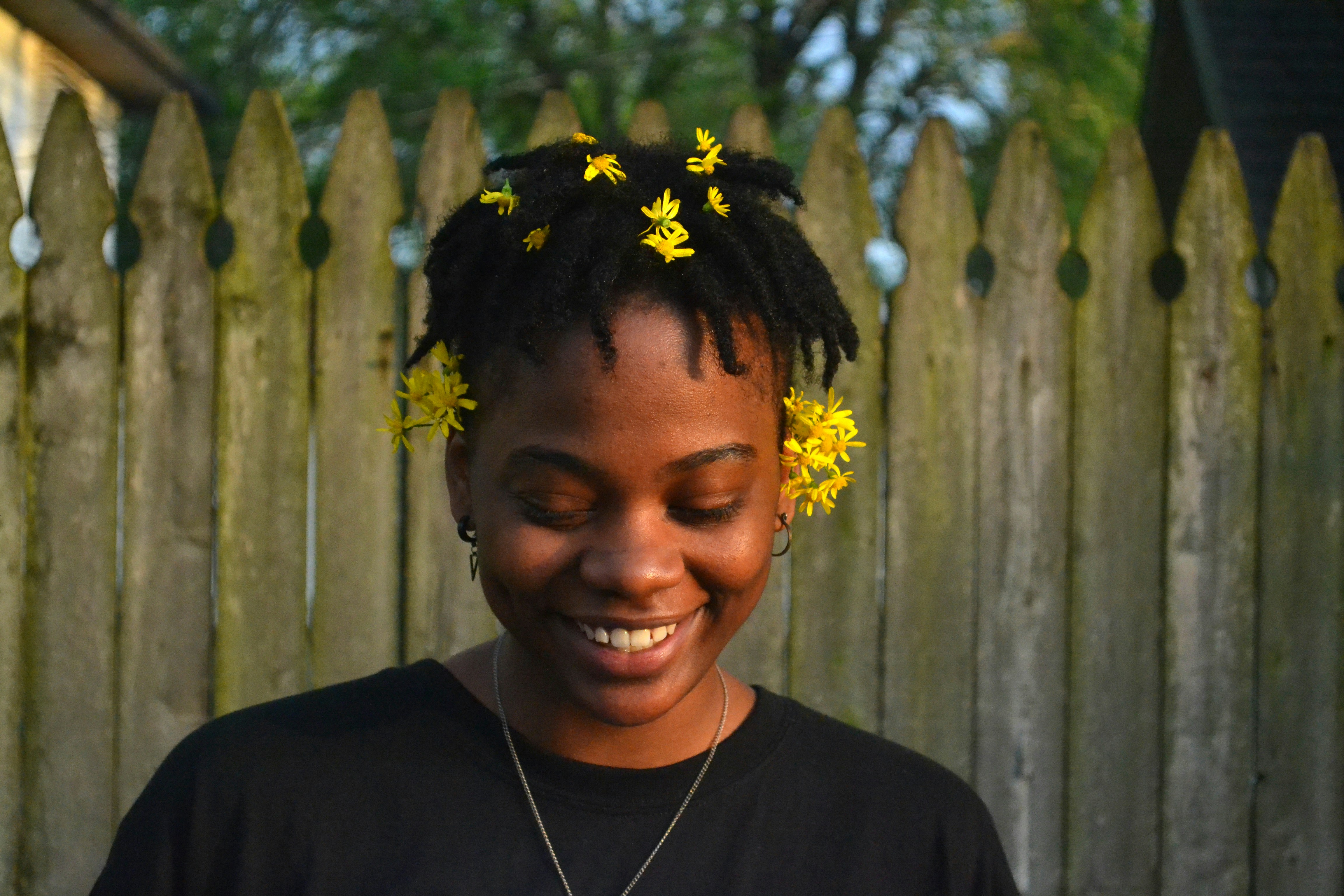
Let's skip the inspirational hand-wave and go straight to the math.
Black girls make up 15% of girls in U.S. public schools and absorb 45% of out-of-school suspensions, 37% of in-school suspensions, and 43% of expulsions, according to the U.S. Government Accountability Office's September 2024 report on K-12 discipline (GAO, 2024). Suspension rates for Black girls run 5.2 times those of white girls nationally, and 20.5 times in the District of Columbia. That's not a behavior problem. That's a perception problem with a budget line.
The perception has a name. Researchers at Georgetown Law's Center on Gender Justice and Opportunity call it adultification bias: adults see Black girls as young as five as less innocent, less in need of nurturing, and more adult-like than their white peers (Epstein, Blake, & González, 2017). The follow-up, drawn from focus groups with Black girls and women ages 12 to 60-plus across the country, confirmed that they live this in real time. Co-author Jamilia Blake put it plainly: "Almost all the black girls and women we talked to said they'd experienced adultification bias as children. And they overwhelmingly agreed that it led teachers and other adults to treat them more harshly and hold them to higher standards than white girls" (Blake & Epstein, 2019). When a grown woman tells you a teacher treated her like a problem at age seven, she is not being dramatic. She is being accurate.
This is the field we are building in. So when Black Girl Assembly talks about LeadHers in Bloom, we are not selling a feel-good summer program. We are funding an evidence-based intervention against a documented harm.
The research, briefly, with receipts
Three things show up over and over in the peer-reviewed literature on what helps Black, Brown, and Indigenous girls thrive.
First, culturally responsive programming works. A multi-site review of out-of-school programs found that culturally responsive design, including youth voice, family involvement, and curricula that center the racial and ethnic identity of participants, produced measurable gains in Black girls' agency and engagement (Lewis-Chiu et al., 2019). Programs that strengthen ethnic-racial identity reduce risky behavior and stabilize self-concept across the middle school transition, which is when the bottom drops out for a lot of Black girls (Jones & Neblett, 2017).
Second, arts engagement is not an extra. A systematic review concluded that regular arts engagement is causally linked to improved adolescent mental health and wellbeing through self-esteem, emotional regulation, identity exploration, and a stronger positive self-narrative (Mansfield et al., 2024). The Wallace Foundation's 18-month study of 35 youth arts organizations designed by, for, and with communities of color across Atlanta, Chicago, Detroit, Louisville, Newark/Paterson, Oakland, Tacoma, and Washington, D.C. named seven characteristics of programs that produce belonging, identity affirmation, and skill development at once. They include "Establish Artful Sanctuaries," "Promote Cultural Visibility," and "Emphasize Equity Intentionality" (Osai, Akiva, Spiezia, Young, & Medrano, 2025).
Third, leadership development for girls of color, when it is intentional and identity-affirming, builds the protective factors the literature keeps asking for. Indigenous youth research has shown for over a decade that culturally grounded mentorship, traditional knowledge, and meaningful contribution to community are core protective factors against the mental-health disparities colonization keeps producing (Petrasek MacDonald, Ford, Cunsolo Willox, & Ross, 2013). Latina-focused leadership and STEM programs show the same shape: same-identity mentors, cohort models, and explicit attention to navigating racism produce real gains in persistence and self-efficacy (Feliú-Mójer et al., 2023).
Now overlay that with money.
The Ms. Foundation for Women's Pocket Change report found that in 2017 the total philanthropic investment in women and girls of color came to roughly $357 million out of $66.9 billion in foundation giving, which works out to $5.48 per year per person (Ms. Foundation for Women & Strength in Numbers Consulting Group, 2020). Alia Stevenson, Development Manager for the Advancing Girls Fund, has stated that "when you specifically zoom in on funding for girls and young women of color, we're getting around the half percentage point" (Tides, 2022). You cannot solve a structural problem with pocket change. You can, however, document it and stop pretending the underinvestment is an accident.
What LeadHers in Bloom actually does
Roots is where it begins. This is the foundational cohort of LeadHers in Bloom — an 8-week leadership immersion for Black girls ages 12–14. Before a girl can lead a room, a team, or a movement, she has to know who she is.
Through arts-based learning — spoken word, visual art, movement, storytelling, and collaborative creative practice — participants explore identity, voice, values, and what leadership actually feels like from the inside. This is not a program about public speaking tricks or college prep checklists. It is about building a girl who knows herself deeply enough that no one can convince her she is less than she is.
Rise is the advanced leadership cohort of LeadHers in Bloom — an 8-week program for Black girls ages 15–17 who are ready to move from knowing themselves to moving the world.
Rise is the advanced leadership cohort of LeadHers in Bloom. Where Roots builds the interior, Rise builds the impact. Participants engage deeply with civic leadership, influence, mentorship, and what it means to lead not just for yourself but for your community. Arts remain the delivery vehicle, through storytelling, documentary, design, performance, and collaborative creative practice, because leadership that cannot communicate is leadership that cannot move. Girls who complete Roots are prepared for Rise, but Rise also welcomes new participants who are ready for the deeper work.
Mentors are pulled from the community and Alchemy for Change’s UnShrink and Lead leadership accelerator for Black women, so the girls are not being mentored by strangers. They are being mentored by women who already understand the room and who look like them.
Read that against the research, and it lines up exactly. Same-identity mentorship. Culturally responsive curriculum. Arts-based self-expression. Cohort model. Real geography in a real neighborhood. A clear pathway to higher education and creative careers. This is the design the literature has been pointing at for twenty years.
The Assembly Method™, in plain English
BGA's work runs on a proprietary methodology that sounds simple but isn't.
GATHER
The cohort is the first intervention.
Before any content is delivered, the circle is built. Agreements, felt safety, and sacred assembly come first. The room is the medicine. The sisterhood is the curriculum.
Grounded in African diasporic gathering traditions and Patricia Hill Collins on safe space.
GROUND
Cultural and somatic anchoring.
Each participant is connected to her lineage, her body, and her current truth before any leadership content is introduced. Healing is not the bonus feature. It is the foundation everything else stands on.
Grounded in somatic abolitionism (Resmaa Menakem) and embodied cultural memory.
GROW
Identity, voice, values, and skill, delivered through art.
Spoken word, visual art, movement, sound, and storytelling are the primary modalities. Never lecture-based. Research confirms that creative arts heal where traditional systems cannot reach.
Grounded in HHS Office of Minority Health research on creative arts as health intervention, and hip-hop pedagogy.
GIVE
From the inside of the room to the outside world.
Power mapping, civic projects, mentorship, prototype and pitch. The work moves out of the cohort and into the community. Leadership becomes practice, not theory.
Grounded in Freirean praxis and civic identity development research.
GLOW
Public witnessing, lifelong infrastructure.
Every cohort closes with a ceremony. The Garden Ceremony, the Rise Ceremony, the Spark Showcase. Transformation is witnessed publicly, then graduates enter the ongoing alumni infrastructure that holds them for life.
That is the Assembly Method™. A practice, not a poster.
What you do now
If you've read this far, you already know. The school system is overcorrecting on Black, Brown, and Indigenous girls and underinvesting in the very interventions the research says work. Philanthropy is funding the speech and skipping the program. Black Girl Assembly is doing the unglamorous, evidence-based work of building one girl, one cohort, one neighborhood at a time. We do not need your applause. We need your dollars on the table.
Donate to Black Girl Assembly, earmarked for LeadHers in Bloom, at https://givebutter.com/black-girl-assembly. A gift covers transportation, art supplies, mentor stipends, food, and the kind of summer that rewires what these girls believe is possible. Recurring monthly gifts let us plan beyond the cohort and into the next cycle. Larger gifts underwrite full participant scholarships. Corporate matches double the floor.
You already knew Black girls were brilliant. Now fund the structure that lets them lead.
References
Blake, J. J., & Epstein, R. (2019). Listening to Black women and girls: Lived experiences of adultification bias. Georgetown Law Center on Poverty and Inequality.
Crenshaw, K. W., Ocen, P., & Nanda, J. (2015). Black girls matter: Pushed out, overpoliced, and underprotected. African American Policy Forum & Center for Intersectionality and Social Policy Studies, Columbia Law School.
Epstein, R., Blake, J. J., & González, T. (2017). Girlhood interrupted: The erasure of Black girls' childhood. Georgetown Law Center on Poverty and Inequality.
Feliú-Mójer, M. I., et al. (2023). Seeds of success: Empowering Latina STEM girl ambassadors through role models, leadership, and STEM-related experiences. CBE—Life Sciences Education.
Jones, S. C. T., & Neblett, E. W. (2017). Future directions in research on racism-related stress and racial-ethnic protective factors for Black youth. Journal of Clinical Child & Adolescent Psychology, 46(5), 754–766.
Lewis-Chiu, C., Jenkins, T., & Sanders, M. (2019). A seat at the table: Listening to adolescent Black girls. Afterschool Matters, 29, 1–9.
Mansfield, L., Daykin, N., & Kay, T. (2024). Does regular engagement with arts and creative activities improve adolescent mental health and wellbeing? A systematic review and assessment of causality. Journal of Youth and Adolescence.
Ms. Foundation for Women & Strength in Numbers Consulting Group. (2020). Pocket change: How women and girls of color do more with less.
Osai, E., Akiva, T., Spiezia, J., Young, A., & Medrano, T. (2025). Well-being and well-becoming through the arts: A picture of mattering for youth of color. University of Pittsburgh & Forum for Youth Investment, commissioned by The Wallace Foundation. https://doi.org/10.59656/A-YA1273.001
Petrasek MacDonald, J., Ford, J. D., Cunsolo Willox, A., & Ross, N. A. (2013). A review of protective factors and causal mechanisms that enhance the mental health of Indigenous Circumpolar youth. International Journal of Circumpolar Health, 72(1), 21775.
Rivas-Drake, D., et al. (2014). Ethnic and racial identity in adolescence: Implications for psychosocial, academic, and health outcomes. Child Development, 85(1), 40–57.
Tides. (2022). Black leadership and the need to support young women of color.
U.S. Government Accountability Office. (2024). K-12 education: Nationally, Black girls receive more frequent and more severe discipline in school than other girls (GAO-24-106787).